


Three Steps to the Industrial Internet (I)
2023-03-14
Author: Mr. Gu Wei, as the founder of Lingrui Lanxin, has been focusing on the IT industry for 20 years. He has a deep understanding of IT software and hardware, virtualization, cloud computing, IDC and other business fields. He has worked for many well-known companies in the industry, such as IBM and Huawei (USA).
Mr. Gu Wei graduated from Aston Business School in the UK with dual degrees in Engineering and Management. He is currently pursuing an EMBA at Tsinghua University. In 2015, he was invited by Harvard Square's Outstanding Leaders in the United States and became a VIP member.
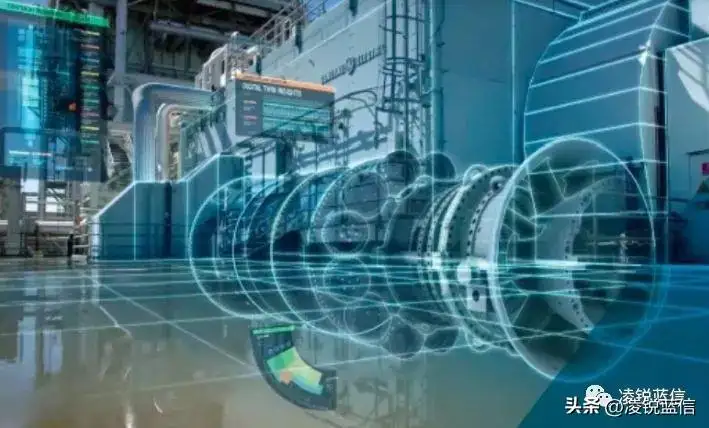
There are many concepts and articles of Industrial Internet, or Industrial Internet, so we will not repeat the definition. Its greatest value is to enable enterprises to share resources within the industry and facilitate integration; Accurately serving end customers, achieving personalized customized production and supply; Thereby reducing inventory; Simultaneously combining online finance to facilitate financing.
How can an enterprise really achieve industrial Internet? Xiao Gu has also studied some popular articles and witnessed enterprises that have already achieved preliminary intelligent production. Here is a brief summary for readers, offering valuable insights. Based on the value brought by the above industrial Internet platform (hereinafter referred to as the platform), an enterprise should have the following basic capabilities to successfully start a platform:
· Use the advantages of the Internet as a lever to leverage larger and more high-end resources for our own use
· An efficient operating industrial ecosystem
· Accurate control
· A digital platform
In this way, it is not difficult to draw the conclusion that there are three steps for enterprises to move towards the industrial Internet platform:
一, Establish or strengthen an internal precision control system to achieve efficient operation, while also ensuring proper technical and business interfaces to prepare for the next step. The reason for taking this step first is very simple. One's internal processes are cumbersome and unclear. How to welcome more and better resources to grow and strengthen?
二, Integrate the existing resources of the enterprise, such as customers, sales channels, supply chain, inventory, logistics and other aspects, and first do a good job in the narrow sense of self owned industrial Internet. Similarly, set up technical and business interfaces. To do the first step well, actually this second step is not difficult from a technical perspective. The difficulty lies in adapting everyone in the enterprise to such a platform environment, treating it as a small battle training before a big battle, laying a solid foundation for operational capabilities in the third step!
三, Expand the platform to the industry, integrate industry resources, and step into a broader world!
Leaving aside the industrial Internet, what is the most important foundation for an enterprise to settle down, besides its core competitiveness? The answer is: open up sources and reduce costs. Open source is constantly expanding business, and everyone understands it without further elaboration. To put it simply, cost saving. When it comes to cost saving, many people naturally think of saving money, and in most cases, they start from two aspects: lowering supplier prices and lowering internal expenses. However, blindly lowering supplier prices or internal costs may lead to low-quality products and internal instability. Another cost saving option is to precisely control any resources that are under your control. Accurate control brings efficient operation! Note that the resources that should be controlled by oneself should be managed well, and should not be controlled by oneself. There is no need to waste too much energy intervening.
Therefore, the first step towards a platform: refined control is the first self-improvement that a company should start with. In fact, this topic is not a new thing. For many years, enterprises have been tirelessly pursuing refined management and efficient operation. Frederick Winslow Taylor's scientific management has long existed, and there is now a digital management philosophy that utilizes IT technology. After all, which parts of the enterprise require refined management? Although many knowledgeable individuals are not unfamiliar with this, Xiaogu would like to briefly summarize here:
-
First of all, it is the business layer, customers and sales channels, the foundation of enterprise security, which cannot be ignored! Given that many manufacturing industries are aimed at the general public and difficult to sort out. This may require more emphasis on refined management of channel partners. Based on Xiaogu's previous experience, there are indeed many foreign companies with complete CRM systems, which are subdivided into various roles such as end customers, sales agents, and solution partners. Partners can find the latest manufacturer information, cooperation policies, customer reporting, online training, certification, and more online. At the same time, it also has the real-time interaction ability between manufacturers and partners, which enables manufacturers to have a more detailed understanding of the terminal market and strengthens the harmonious cooperation relationship between manufacturers and channels.
-
There is no doubt about the refined control of production and warehousing processes! In addition to achieving automation and controlling the use and inventory of production materials, more attention should now be paid to the entire process of personalized and customized production, known as intelligent production systems. Intelligent production mainly involves fine control of three key points: delivery cycle, production efficiency, and inventory operation efficiency. Going further, we need to consider multiple details such as work order automation, equipment automation, production and process automation, material delivery automation, and warehouse handling automation. As a member of the China Big Data Industry Ecology Association, Xiaogu had the privilege of witnessing a complete set of personalized production intelligent automation production systems in a domestic private furniture enterprise last year. The efficiency of work order scheduling, production, and warehousing management was impressive!
-
Smooth, efficient, and secure administrative approval process. This part is actually nothing special, being too cumbersome can lead to a decrease in efficiency. Here, we mainly mention security issues. The security here refers more to authorization security, rather than the first hacker and other issues that come to mind. In fact, for any enterprise, authorization level and security are very important! If ignored, besides the pain of management chaos, there is a greater possibility of leakage issues! Simply put, relevant matters can only be made known to the relevant parties. Digital systems are completely achievable.
-
Efficient personnel management. All operations cannot be separated from people, and personnel management is the most difficult. Digital personnel management may not guarantee 100% efficiency, but it may help.
-
Refinement and efficiency of enterprise intranet are necessary conditions! Previously, our requirement for the internet was smoothness, and later it was for good performance, but now it's not that simple! Efficient management in all aspects mentioned above can be achieved through the use of IT technology solutions. And these solutions can no longer be solved simply through OA, involving many high-energy technologies such as CRM, ERP, PLM, MES, APS, SCM, BPM, ECM, HRM, Big data, and even the Digital Twin that has emerged in the past two years And the efficiency of the entire system is to connect the separate subsystems mentioned above, which cannot be separated from the steps of efficient interoperability and data analysis. Therefore, without an efficient internal network, the entire system cannot be considered efficient. Just like someone who owns supercars such as Porsche, Lamborghini, and McLaren, but can only run on bumpy dirt roads... How do these sports cars perform?
If enterprises can achieve such fine control and efficient operation, the mode of entering the industrial (industrial) Internet platform is just around the corner! Even if the platform's plan is not immediately launched, existing resources can be fully utilized, combat effectiveness can be greatly improved, and true source and cost savings can be achieved!
How to proceed with the second step? Xiaogu will analyze it for you next time.
Related News


Service Hotline
Contact Us
Room 504A, 5/F, AIA Financial Center,No. 26 East North 3rd Ring Road, Chaoyang District, Beijing, P.R.China;
